

5G is the fifth generation of mobile network technology, designed to provide faster data speeds, lower latency, greater capacity, and more reliable wireless connections than previous generations. It is not simply “faster 4G”; it is a broader communications platform intended to support everything from smartphones and home internet to industrial automation, connected vehicles, and large networks of sensors.
TLDR: 5G is a modern mobile network standard that uses new radio technologies, wider channels, and advanced antenna systems to deliver higher speeds and lower delays than 4G. Its real-world performance depends heavily on the type of 5G spectrum being used: low-band, mid-band, or high-band millimeter wave. 5G can range from broad rural coverage to extremely fast short-range service in dense urban areas. It works by combining upgraded cell towers, small cells, cloud-based network cores, and intelligent traffic management.
What Is 5G?
5G stands for fifth generation, referring to the latest major generation of cellular network technology. Each generation has marked a significant step forward: 2G made digital voice and text messaging practical, 3G introduced mobile internet, 4G made streaming and app-based services mainstream, and 5G expands mobile networks into a much more flexible and high-capacity communication system.
At its core, 5G allows devices such as phones, tablets, routers, vehicles, sensors, and machines to connect wirelessly to a cellular network. These devices communicate with nearby base stations, which then connect into the operator’s wider network and the internet. What makes 5G different is the way it uses spectrum, antennas, software, and network architecture to deliver more data to more devices with less delay.
5G is governed by international technical standards, primarily developed through the 3rd Generation Partnership Project, commonly known as 3GPP. These standards help ensure that devices and networks from different manufacturers can work together reliably. While availability and performance vary by country, operator, location, and device, the underlying goal is consistent: faster, more responsive, and more adaptable wireless connectivity.

How Fast Is 5G?
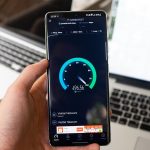
One of the most widely promoted benefits of 5G is speed. In theory, 5G can reach peak download speeds of multiple gigabits per second under ideal conditions. In real networks, speeds are usually lower, but they can still be significantly faster than 4G LTE, especially where mid-band or high-band spectrum is available.
Typical real-world 5G speeds often fall into several broad categories:
- Low-band 5G: usually similar to strong 4G LTE, often ranging from about 30 Mbps to 150 Mbps, depending on congestion and signal conditions.
- Mid-band 5G: commonly provides hundreds of megabits per second and may exceed 1 Gbps in favorable locations.
- High-band millimeter wave 5G: can deliver extremely fast speeds, sometimes above 1 Gbps and potentially several gigabits per second, but only over short distances.
Speed also depends on factors such as network traffic, distance from the tower, building materials, device capability, weather conditions, and the amount of spectrum assigned to the operator. A user standing near a high-capacity 5G site in a city may see very different performance from someone indoors in a rural area connected to low-band 5G.
Download speed is only one part of the story. Upload speed, which affects video calls, cloud backups, live streaming, and sending large files, is also improved in many 5G deployments. However, uploads are often slower than downloads because mobile networks typically allocate more capacity to incoming data than outgoing data, reflecting how most users consume online services.
What Is 5G Latency?
Latency is the amount of time it takes for data to travel from a device to the network and back. It is often described as delay or responsiveness. While speed determines how much data can be transferred, latency determines how quickly a network reacts.
4G networks commonly have real-world latency in the range of 30 to 60 milliseconds, though this varies. 5G can reduce that delay, with many networks delivering latency closer to 10 to 30 milliseconds. In specialized 5G systems, particularly private industrial networks, latency can be reduced even further.
Lower latency matters for applications that require near-instant feedback, including:
- Online gaming and cloud gaming
- Video conferencing with less lag
- Augmented reality and virtual reality
- Industrial automation and robotics
- Connected vehicles and traffic systems
It is important to be realistic: 5G does not automatically make every online service instantaneous. Latency is affected by the full path between a device and the destination server, not only the radio link. Still, 5G provides a stronger foundation for low-delay services than earlier mobile technologies.
5G Range: How Far Does It Reach?
The range of 5G depends mainly on the frequency band being used. This is one of the most important concepts for understanding why 5G performance can differ so much from one place to another. Higher frequencies can carry more data but generally do not travel as far or penetrate buildings as well. Lower frequencies travel farther but have less capacity.
5G spectrum is usually grouped into three main categories:
- Low-band 5G: These frequencies are often below 1 GHz. They provide wide coverage and good building penetration, making them useful for rural areas and broad nationwide service. However, speeds are generally more modest.
- Mid-band 5G: These frequencies often fall between about 1 GHz and 6 GHz. Mid-band is widely considered the best balance of speed and coverage. It can cover neighborhoods and towns while still providing high capacity.
- High-band 5G, or millimeter wave: These frequencies are typically above 24 GHz. They can deliver extremely high speeds and large capacity, but the range is short, and signals are easily blocked by walls, trees, vehicles, and even the human body.
In practical terms, low-band 5G may cover several miles from a tower in open areas, while mid-band may cover a smaller but still useful area. Millimeter wave may only reach a few hundred meters and usually requires a clear line of sight or dense small-cell placement. This is why high-band 5G is most often found in stadiums, airports, business districts, and crowded urban streets rather than remote rural regions.

How Does 5G Work?
5G works by using radio waves to transmit data between devices and network equipment. A 5G device contains a modem and antennas that send and receive signals. Nearby base stations, often located on towers, rooftops, poles, or building sides, manage those radio connections and route traffic into the operator’s network.
The radio access portion of 5G is called 5G New Radio, or 5G NR. It is designed to operate across a wide range of frequency bands, from long-range low-band spectrum to short-range millimeter wave. 5G NR also supports wider channels than 4G in many deployments, meaning more data can be transmitted at once.
A key technology behind 5G is massive MIMO, which stands for multiple input, multiple output. This uses many antenna elements at a base station to send and receive multiple data streams at the same time. Instead of broadcasting energy equally in all directions, advanced antennas can use beamforming to focus the signal toward a specific device or area. This improves efficiency, capacity, and signal quality.
Another important part of 5G is the modernized network core. The 5G core is more software-based and cloud-oriented than previous mobile network cores. It can route traffic more efficiently, support network slicing, and handle different types of services with different performance needs.
Network slicing allows an operator to create virtual sections of the network for specific purposes. For example, one slice may be optimized for high-speed consumer internet, another for low-latency industrial control, and another for massive sensor connections. This does not mean every consumer automatically experiences network slicing, but it is an important capability for enterprise and infrastructure applications.
Small Cells and Dense Networks
Because some 5G frequencies have shorter range, especially millimeter wave, operators often use small cells. These are compact base stations installed closer to users, commonly on streetlights, utility poles, walls, transit stations, and indoor venues. Small cells help provide extra capacity in busy areas where traditional large towers alone cannot handle demand.
Dense small-cell networks are particularly important in city centers, stadiums, shopping districts, transportation hubs, and campuses. They make it possible for many people and devices to connect at once without overwhelming the network. However, deploying small cells requires site permissions, power, fiber or wireless backhaul, maintenance, and careful planning.

What Is 5G Used For?
The most common use of 5G today is enhanced mobile broadband. For ordinary users, that means faster browsing, smoother video streaming, better performance in crowded places, and improved mobile hotspot capability. Many households also use 5G fixed wireless access, where a 5G router provides home internet service without a traditional cable or fiber connection.
Beyond consumer applications, 5G is designed to support more advanced uses. Manufacturers can use private 5G networks to connect machines, sensors, robots, and quality-control systems. Hospitals may use secure wireless systems for connected medical devices and operational efficiency. Ports, mines, warehouses, and energy facilities can use 5G to monitor equipment and support automation.
Another major category is the Internet of Things, often shortened to IoT. 5G can support large numbers of low-power devices, such as meters, environmental sensors, asset trackers, and city infrastructure. Not every IoT device needs high speed, but many benefit from reliable coverage, efficient power use, and scalable network management.
Is 5G Safe?
5G uses non-ionizing radiofrequency energy, the same general category of electromagnetic energy used by previous cellular networks, Wi-Fi, radio, and television broadcasting. Non-ionizing radiation does not have enough energy to break chemical bonds or directly damage DNA in the way ionizing radiation, such as X-rays or gamma rays, can.
Health and safety limits for wireless networks are set by national regulators and informed by international scientific bodies. 5G networks must comply with exposure limits that apply to radiofrequency emissions. These limits include substantial safety margins. As with any technology deployed at scale, ongoing research and monitoring continue, but 5G equipment operated within regulatory limits is considered safe by major public health authorities.
5G Compared With 4G
Compared with 4G, 5G can provide higher speeds, lower latency, better support for dense crowds, and more flexible network management. However, the improvement is not identical everywhere. A strong 4G connection can outperform a weak or congested 5G connection, especially if the 5G service is using low-band spectrum with limited bandwidth.
The transition from 4G to 5G is also gradual. Many networks still use both technologies together. Some early 5G deployments used a non standalone architecture, where 5G radio access worked alongside a 4G core network. More advanced standalone 5G uses a full 5G core, enabling more of the technology’s long-term capabilities.
The Bottom Line
5G is a significant evolution in wireless communications, combining faster radio technology, advanced antennas, wider spectrum, small cells, and cloud-based network design. Its range and speed vary because different frequency bands behave differently: low-band offers broad coverage, mid-band offers the strongest balance, and millimeter wave offers the highest capacity over short distances.
For consumers, 5G can mean faster mobile data, better performance in crowded areas, and practical wireless home internet options. For businesses and public infrastructure, it can support automation, sensors, private networks, and low-latency applications. The most accurate way to understand 5G is not as a single speed or one type of signal, but as a flexible network platform built to connect more devices, more reliably, in more demanding environments.