

Data Loss Prevention has moved from a narrow security control into a core privacy compliance capability. In 2026, organizations need DLP tools that can do more than block an email attachment; they must discover sensitive data across hybrid environments, classify it accurately, monitor risky behavior in real time, and map controls to privacy laws such as GDPR, CCPA/CPRA, HIPAA, PCI DSS 4.0, GLBA, and emerging AI governance rules.
TLDR: The best DLP solutions for data privacy compliance in 2026 combine data discovery, classification, monitoring, and regulatory reporting in one integrated workflow. Microsoft Purview, Symantec DLP, Forcepoint, Netskope, Proofpoint, Digital Guardian, BigID, Varonis, and Nightfall are among the strongest options, but each excels in different environments. Enterprises should choose based on where their sensitive data lives, how complex their compliance obligations are, and whether they need endpoint, cloud, SaaS, email, or database-focused protection.
Why DLP Matters More for Privacy Compliance in 2026
Privacy compliance has become a moving target. Regulators expect organizations to know what sensitive data they collect, where it is stored, who can access it, how it moves, and when it should be deleted. That is exactly where modern DLP platforms provide value.
Traditional DLP focused mainly on preventing leaks: stopping files from being emailed externally, copied to USB drives, or uploaded to unsanctioned cloud apps. Today’s leading platforms go further. They help privacy, security, legal, and governance teams build a living inventory of personal data, enforce policy across distributed environments, and produce evidence for audits.
In 2026, the highest-rated DLP solutions are judged by four major capabilities:
- Data discovery: Finding sensitive information across endpoints, cloud storage, SaaS apps, databases, email, and collaboration tools.
- Data classification: Labeling information by sensitivity, type, ownership, and regulatory relevance.
- Monitoring and enforcement: Detecting risky behavior and blocking, quarantining, encrypting, or alerting on policy violations.
- Regulatory support: Providing templates, reports, workflows, and audit evidence for privacy and security frameworks.

1. Microsoft Purview Data Loss Prevention
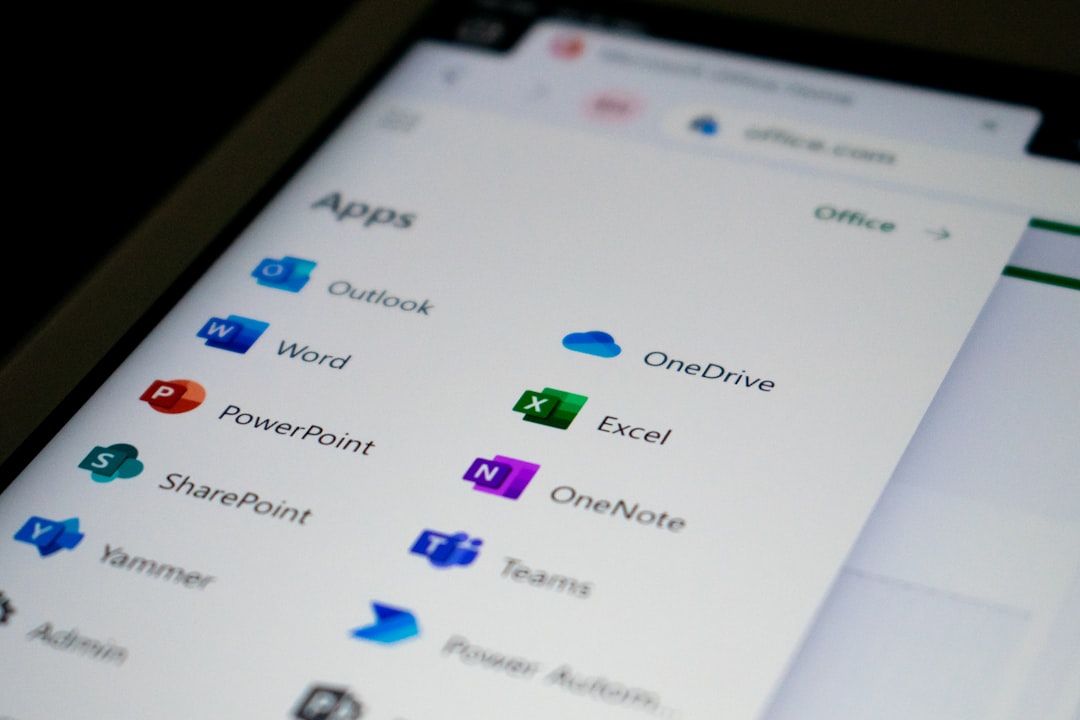
Microsoft Purview DLP is one of the strongest choices for organizations already invested in Microsoft 365, Azure, Teams, SharePoint, OneDrive, and endpoint management. Its biggest advantage is native integration. Instead of bolting privacy controls onto collaboration tools, Purview applies policies directly inside the Microsoft ecosystem.
For data discovery, Purview can scan Microsoft 365 repositories and connected environments for sensitive information types such as personal identifiers, financial records, health data, credentials, and custom patterns. It also supports trainable classifiers, which help identify business-specific documents such as contracts, HR files, source code, or intellectual property.
Its classification features are excellent for organizations using sensitivity labels. Labels can apply encryption, access restrictions, visual markings, and retention rules. This makes Purview especially useful for aligning DLP with information governance and records management.
On the monitoring side, Purview supports policy enforcement across email, Teams, endpoints, and cloud apps. It can warn users, block sharing, restrict downloads, or generate alerts for security teams. For regulatory support, Microsoft provides compliance manager mappings, audit logs, eDiscovery integration, and built-in templates for major regulations.
Best for: Microsoft-centric organizations that want integrated DLP, classification, retention, eDiscovery, and compliance reporting.
2. Symantec Data Loss Prevention by Broadcom
Symantec DLP remains a benchmark enterprise DLP platform. It is widely used by large, regulated organizations because of its mature policy engine, deep content inspection, and broad coverage across endpoint, network, storage, and cloud channels.
Its data discovery capabilities are strong in complex enterprise environments. Symantec can scan file shares, databases, repositories, endpoint data, and cloud storage to locate regulated information. It supports exact data matching, indexed document matching, fingerprinting, and advanced content detection.
For classification, Symantec is powerful but often requires careful configuration. Organizations with mature security teams can create highly precise policies, including rules for structured data, unstructured documents, and proprietary information.
The platform’s monitoring capabilities are among the most comprehensive in the market. It can inspect network traffic, endpoint activity, email, web uploads, removable media, and cloud usage. Its regulatory support is also strong, with predefined policy packs and reporting tools for frameworks such as GDPR, HIPAA, PCI DSS, and other industry-specific mandates.
Best for: Large enterprises that need deep, customizable DLP across many channels and have the resources to manage it properly.
3. Forcepoint Data Loss Prevention
Forcepoint DLP is known for combining data protection with user behavior context. This makes it particularly useful for organizations that want to reduce false positives and focus on actual risk rather than isolated events.
For data discovery, Forcepoint can locate sensitive data across endpoints, network locations, cloud apps, and enterprise repositories. Its classification capabilities include fingerprinting, data matching, optical character recognition, predefined policies, and custom rules.
Where Forcepoint stands out is behavior-aware monitoring. It can factor in user risk, destination risk, activity patterns, and policy severity. For example, an employee uploading a labeled confidential file to an approved internal system is treated differently from a high-risk user attempting to send the same file to a personal cloud account.
Its regulatory support is practical and business-friendly. Prebuilt templates help teams address GDPR, PCI DSS, HIPAA, and other privacy obligations, while workflow tools support incident review and remediation.
Best for: Organizations that want DLP enforcement enriched by user behavior analytics and risk-adaptive controls.
4. Netskope DLP
Netskope is a top choice for cloud-first and hybrid organizations. Its DLP functionality is part of a broader Security Service Edge platform that includes CASB, secure web gateway, zero trust network access, and cloud security controls.
Its data discovery capabilities are especially strong across SaaS, IaaS, web traffic, and cloud storage. Netskope can inspect data at rest and in motion across applications such as Google Workspace, Microsoft 365, Salesforce, Box, Slack, and many other cloud services.
For classification, Netskope uses predefined identifiers, custom dictionaries, exact data matching, fingerprinting, machine learning, and context-aware policies. It can classify files and apply policies depending on user, device, app, location, and activity.
The platform’s monitoring is highly relevant for modern work. It can detect risky uploads, downloads, sharing events, generative AI usage, and unauthorized movement of sensitive data between cloud services. Its compliance support includes policy templates and dashboards for GDPR, CCPA, HIPAA, PCI DSS, and other frameworks.
Best for: Cloud-first businesses that need DLP embedded in SaaS, web, and cloud access security.

5. Proofpoint Enterprise DLP
Proofpoint is particularly strong where people-centric security meets data protection. Its DLP capabilities benefit from Proofpoint’s expertise in email security, insider threat management, and user risk analytics.
For data discovery, Proofpoint can identify sensitive information in email, endpoints, cloud apps, and collaboration channels. Its classification features support regulated data types, custom identifiers, and contextual rules.
Its greatest strength is monitoring communications and user behavior. Many data leaks happen through email, file sharing, or compromised accounts, and Proofpoint is built to detect those patterns. It can help identify negligent employees, malicious insiders, and targeted users who are more likely to cause a compliance incident.
For regulatory support, Proofpoint provides policies and reporting aligned with privacy and security obligations. It is especially valuable for organizations that treat email and identity-based risk as major compliance concerns.
Best for: Organizations focused on email DLP, insider risk, and people-centric data protection.
6. Digital Guardian
Digital Guardian is a strong endpoint and intellectual property protection platform, often favored by organizations that need deep visibility into how sensitive data is used on employee devices.
Its data discovery capabilities include scanning endpoints, servers, and repositories for sensitive content. It can identify regulated data, source code, design files, financial documents, and other high-value information.
For classification, Digital Guardian supports automated and manual labeling, contextual classification, and policy-based tagging. It is particularly good at tracking data regardless of changes to file name, location, or format.
Its monitoring is endpoint-heavy and detailed. The platform can watch copy, print, screen capture, upload, download, file transfer, and removable media activity. This makes it useful for compliance programs that need to prove strong control over data leaving managed devices.
Best for: Companies with high-value intellectual property, regulated endpoint activity, or strict device-level control requirements.
7. BigID
BigID is not a traditional DLP tool in the old sense; it is a data intelligence and privacy automation platform. However, in 2026, it plays a major role in DLP strategies because privacy compliance starts with knowing the data.
BigID excels at data discovery. It can scan structured, semi-structured, and unstructured data across databases, data lakes, cloud storage, SaaS platforms, and enterprise repositories. It identifies personal data, sensitive data, dark data, duplicate data, and overexposed information.
Its classification engine is one of its strongest features. BigID can classify data by identity, sensitivity, residency, policy, ownership, and regulatory relevance. This is extremely useful for GDPR data subject requests, retention management, consent analysis, and privacy impact assessments.
While BigID is not always used as the primary enforcement layer, it integrates with security and DLP tools to trigger remediation. Its regulatory support is excellent for privacy teams, with workflows for DSARs, RoPA, data mapping, risk assessment, and compliance reporting.
Best for: Privacy-led organizations that need deep data discovery, mapping, and governance across complex data estates.
8. Varonis
Varonis specializes in data security posture management, access governance, and threat detection for sensitive enterprise data. It is especially strong for organizations worried about overexposed files, excessive permissions, and insider access.
For data discovery, Varonis scans file systems, SaaS platforms, email, cloud repositories, and databases to locate sensitive information. Its classification engine identifies personal data, financial records, health information, credentials, and custom business data.
Its monitoring focuses heavily on access behavior. Varonis can detect unusual file access, mass downloads, privilege escalation, ransomware-like activity, and risky sharing. Instead of only asking whether data is sensitive, it asks whether the wrong people can access it.
For regulatory support, Varonis helps demonstrate least privilege, access reviews, incident investigation, and remediation of exposed sensitive data. These capabilities are highly valuable for privacy audits.
Best for: Organizations that need to reduce excessive access to sensitive data and improve data security posture.
9. Nightfall AI
Nightfall AI is a modern cloud-native DLP platform designed for SaaS, developer, AI, and collaboration environments. It is popular with technology companies and fast-growing businesses that want flexible, API-driven data protection.
Its data discovery capabilities cover tools such as Slack, GitHub, Google Drive, Jira, Confluence, Zendesk, and other cloud applications. It is particularly useful for finding secrets, credentials, API keys, personal data, and regulated information in places traditional DLP may miss.
For classification, Nightfall uses machine learning detectors, predefined data types, custom rules, and contextual analysis. Its monitoring can alert, quarantine, redact, delete, or automate workflows when sensitive data appears in risky locations.
Its regulatory support is practical for organizations subject to GDPR, HIPAA, PCI DSS, SOC 2, and similar frameworks. It is also relevant for companies trying to manage sensitive data exposure in generative AI workflows.
Best for: SaaS-heavy, developer-centric, and cloud-native organizations that need fast deployment and modern integrations.
How to Compare DLP Solutions in 2026
When evaluating DLP tools, avoid buying based only on feature lists. The best solution depends on your data environment, compliance profile, and operational maturity. Use the following comparison criteria:
- Coverage: Does the tool protect endpoints, email, SaaS, cloud storage, databases, GenAI tools, and unmanaged devices?
- Discovery depth: Can it find sensitive data in structured and unstructured formats, including images, archives, and source code?
- Classification accuracy: Does it support sensitivity labels, exact data matching, machine learning, and custom identifiers?
- Policy flexibility: Can policies adapt based on user, role, device, location, app, data type, and business context?
- User experience: Does it provide coaching prompts and just-in-time warnings rather than simply blocking productivity?
- Compliance evidence: Can it produce audit-ready reports, incident histories, remediation records, and regulatory mappings?
- Integration: Does it connect with SIEM, SOAR, IAM, ticketing, encryption, CASB, and data governance platforms?
Which DLP Solution Is Best?
There is no single best DLP platform for every organization. Microsoft Purview is often the right fit for Microsoft-heavy environments. Symantec and Forcepoint remain strong for large enterprises needing broad, mature DLP. Netskope is excellent for cloud and SaaS protection, while Proofpoint shines in email and insider risk scenarios.
BigID and Varonis are especially valuable when privacy compliance depends on data discovery, access governance, and data mapping. Digital Guardian is compelling for endpoint and intellectual property protection, while Nightfall AI is a strong option for modern SaaS and developer workflows.
Final Thoughts
In 2026, DLP is no longer just a security checkbox. It is a privacy compliance engine that helps organizations understand, control, and prove responsible handling of sensitive data. The strongest platforms combine discovery, classification, monitoring, and regulatory support into a continuous data protection lifecycle.
The smartest approach is to begin with a data risk assessment: identify your most sensitive data, where it lives, who uses it, and which regulations apply. Then choose a DLP solution that fits your architecture and compliance obligations. A well-implemented DLP program does more than prevent leaks; it builds trust with customers, regulators, employees, and business partners.