
Imagine if a scientist had a super-smart assistant. One that never got tired, could read thousands of papers a second, and even had wild ideas of its own. That’s what’s happening right now in physics research—thanks to AI. It’s like giving Einstein the power of a computer brain!
TL;DR
AI is changing how we explore the universe. It helps physicists find patterns, generate predictions, and think outside the box. With AI, discoveries could happen faster than ever before. It’s like adding rocket boosters to the scientific method.
Why Physics Needs a Makeover
Physics is amazing. It’s helped us launch rockets, create lasers, and understand atoms. But there’s a problem—it’s slow. A single experiment can take years. Many discoveries come by trial and error. And with so much data, human researchers can miss things.
Enter AI. Artificial Intelligence can read, learn, and discover at super-speed. It doesn’t replace physicists—it teams up with them. Together, they make a powerful duo.
Meet Your New Lab Partner: AI
AI isn’t just about robots. It can learn from data, spot patterns, and even suggest experiments. Here’s how AI joins the physics party:
- Data Crunching: AI can go through petabytes of data. That’s more than a million gigabytes!
- Pattern Spotting: It can find things humans might miss—even surprises!
- Theory Testing: AI runs endless simulations to test new ideas.
- Prediction Making: It guesses outcomes before an experiment is done.
Imagine hundreds of lab assistants working 24/7, never making a typo. That’s what AI offers.
Cracking the Quantum Code
Quantum physics is weird. Particles pop in and out of existence. Cats are alive and dead at the same time (kind of). It’s confusing—and perfect for AI!
AI can sort through complex quantum data and suggest new theories. It even helps design quantum experiments that would take humans decades to plan.

Some researchers use AI to simplify the “Schrödinger Equation” — the math behind quantum systems. What used to take months now takes minutes.
New Tools for Exploration
AI isn’t only software. It’s part of the tools themselves!
- Smart Telescopes: AI scans the sky and finds new stars and galaxies.
- Intelligent Particle Detectors: AI filters junk data and finds real signals.
- Robotic Labs: AI runs experiments without human hands!
This means faster discovery and fewer errors. Plus, scientists can test weirder, riskier ideas—because AI handles the grunt work.
Speed, Smarts, and Surprises
One big win: AI found ways to create new materials that physicists didn’t even consider. It suggested atom combinations that led to superconductors—materials that conduct electricity with zero resistance.
That idea wasn’t in any textbook. It came from AI seeing patterns no one else saw.
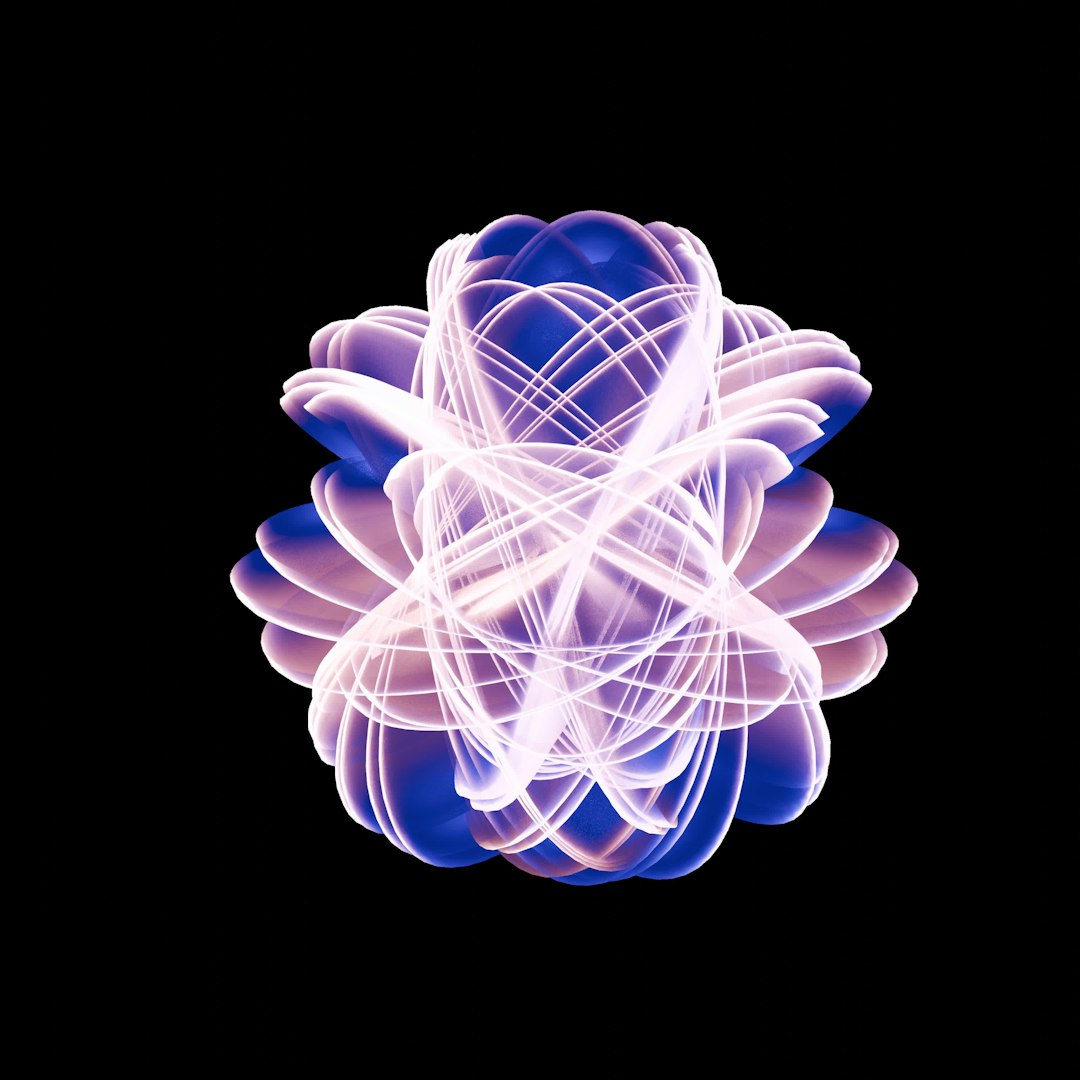
In another case, AI helped predict the structure of a new particle before it was found in a collider. Boom! That saved millions of dollars and years of work.
Humans Still In Charge
But wait—does this mean scientists are out of a job?
Nope! AI is smart, but not wise. It needs physicists to ask the right questions, check the answers, and make sense of the data. Think of AI like a telescope. Alone, it’s just a tool. In a scientist’s hands, it becomes a window to the stars.
In fact, working with AI can make scientists more creative. They get to dream up bolder ideas because the AI can test them quickly.
The New Scientific Revolution
Long ago, Galileo used a telescope to change how we see the universe. Now we’re using AI to do the same—but faster and deeper.
This could be the next big leap in science. With AI, we might finally crack mysteries like:
- How gravity really works
- What dark matter is made of
- If parallel universes exist 🤯
We’re talking about science fiction becoming science fact. And it’s AI that’s opening the door.
Challenges on the Horizon
Of course, AI isn’t magic. It can make mistakes. It can get biased if we feed it bad data. And sometimes, it gives answers we don’t understand right away.
But that’s okay. Science is all about learning from failure. The key is for physicists and AI to work together, check each other, and never stop questioning.
The Future Looks Bright—and Weird
Where do we go from here?
AI will probably become part of every step in physics—ideas, experiments, and even publishing. We might see a future where entire research teams include human scientists and artificial ones side-by-side.
And who knows? Maybe one day an AI will win a Nobel Prize—not alone, but with the human who taught it to think like a physicist.
What You Can Do
Even if you’re not a scientist, this future is for everyone! Here’s how to get involved:
- Take an interest in physics and AI: Read, watch videos, and explore.
- Try out AI tools online: There are free simulators and data sets to play with!
- Support science education: Encourage curiosity in your community.
Who knows? Your idea might be the spark that leads to the next big discovery.
Final Thought
AI is not here to replace curiosity—it’s here to supercharge it. Together, humans and machines can reimagine physics, crack cosmic riddles, and explore the unknown. The universe just got a new co-pilot. And it’s called Artificial Intelligence.