
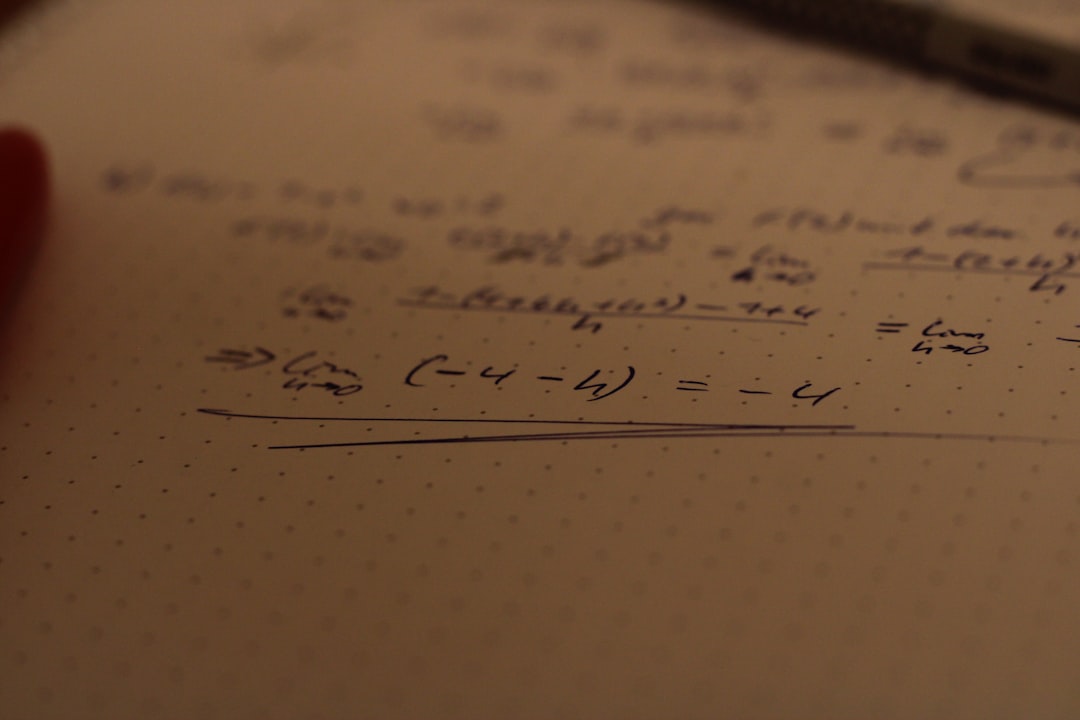

Mathematics is not only a subject of answers; it is a subject of thinking clearly. A well-kept math notebook helps you track ideas, spot mistakes, prepare for exams, and understand why a solution works instead of merely remembering what to do. Whether you are in middle school, high school, college, or studying independently, the way you write your notes can make a major difference in how well you learn.
TLDR: Write math notes in a way that makes your reasoning easy to follow later: use clear headings, show every important step, label formulas, and leave space for corrections. For example, instead of writing only “x = 4,” include the equation, the operation you performed, and a short note explaining why. In one common study scenario, a student who reviews organized notes for 20 minutes daily may retain far more than someone who rereads messy pages once before a test. Think of your notebook as a personal math textbook you build one page at a time.
Start with a Clear Structure
A strong math notebook begins with organization. Each new lesson, topic, or problem set should have a date, a title, and, when useful, a short goal. For example, a page might begin with “Solving Systems of Linear Equations” followed by “Goal: Learn substitution and elimination methods.” This simple habit gives context to your notes and makes review much easier.
Consider dividing your notebook into sections. You might use tabs, sticky notes, or a table of contents at the front. If you study multiple branches of math, separate pages for algebra, geometry, calculus, or statistics can prevent confusion. Even in a single class, separating notes, homework, formulas, and test corrections can save time later.
Write the Problem Before the Solution
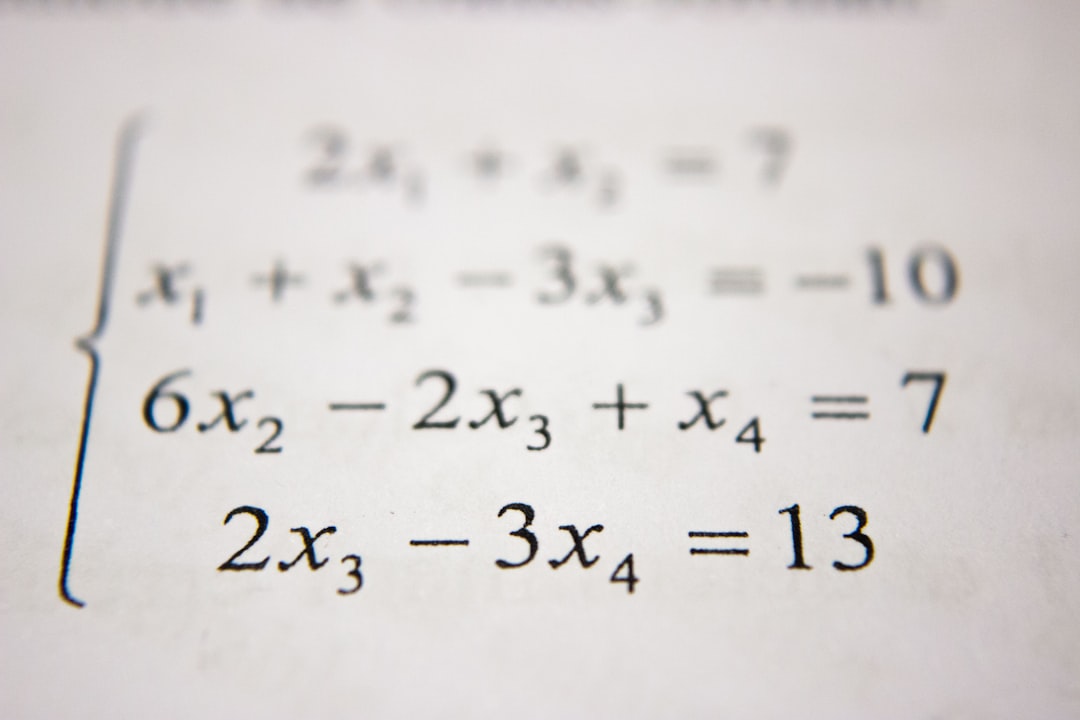
One of the most common notebook mistakes is writing only the solution steps without copying the original problem. This may seem efficient in the moment, but it creates confusion later. When you review, you need to know exactly what question you were answering.
Always write the full problem or at least a clear summary of it. If the problem includes a diagram, graph, or table, copy the necessary information neatly. For word problems, write down the key facts and what is being asked. This helps train your brain to identify important information before jumping into calculations.
A useful format is:
- Problem: Write the original equation, expression, or question.
- Given: List known values, conditions, or definitions.
- Find: State what the final answer should represent.
- Solution: Show the steps clearly.
- Check: Verify the answer when possible.
Show Your Reasoning, Not Just Your Work
Mathematical notes should reveal the path from question to answer. It is tempting to skip steps, especially when a calculation feels obvious. However, skipped steps are often where confusion appears days or weeks later. Writing more complete solutions helps you see patterns and catch errors.
For example, instead of writing:
2x + 5 = 13, x = 4
write:
2x + 5 = 13
2x = 8 (subtract 5 from both sides)
x = 4 (divide both sides by 2)
The second version is more useful because it explains the logic. You do not need to write a long sentence for every line, but short notes such as “combine like terms,” “use distributive property,” or “apply Pythagorean theorem” can be extremely helpful.
Use Space Generously
Math needs room. Crowded notes make equations harder to read and mistakes harder to find. Leave space between problems, between major steps, and around diagrams. If your notebook allows it, use one side of the page for main work and the other side or margin for comments, questions, and corrections.
Margins are especially valuable. You can use them to write:
- Key formulas used in the problem
- Warnings about common mistakes
- Questions to ask your teacher or tutor
- Short summaries of the main idea
- Error notes after checking homework or tests
Leaving blank space may feel wasteful, but it makes your notebook more flexible. Later, when you learn a better method or discover a mistake, you will have room to add notes without making the page unreadable.
Make Formulas Stand Out
Formulas are the landmarks of math notes. If they blend into the rest of the page, they become difficult to find during review. Create a consistent way to highlight them. You might put formulas in boxes, underline them, write them in a different color, or label them with names.
For example:
Quadratic Formula: x = (-b ± √(b² – 4ac)) / 2a
But do not stop at copying the formula. Include a short note about when and how to use it. A formula without context is easy to memorize incorrectly. Next to the quadratic formula, you might write: Use when solving ax² + bx + c = 0, especially when factoring is difficult.
Draw Diagrams Carefully
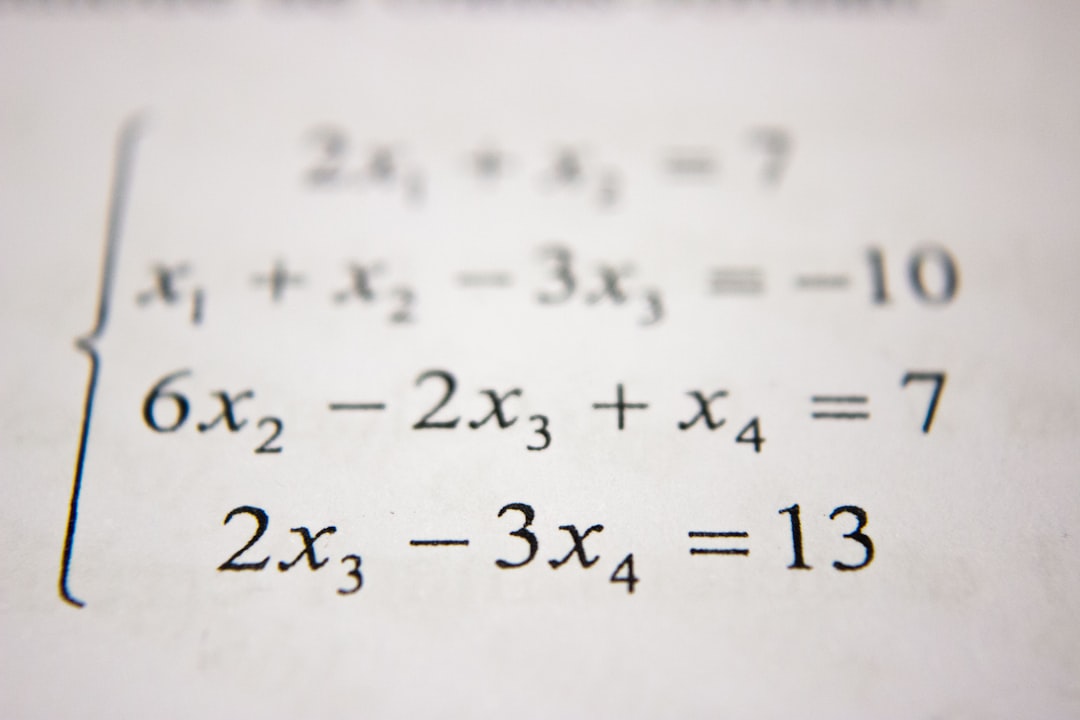
Many areas of math depend on visual thinking. Geometry, trigonometry, graphing, probability, and calculus often become clearer with diagrams. A rough sketch is usually better than no diagram, but it should still be labeled well.
When drawing diagrams, include:
- Known measurements, such as side lengths or angles
- Unknown values, labeled with variables
- Important points, such as intercepts, vertices, or centers
- Units, when relevant
- Arrows or shading to show direction, area, or movement
For graphs, label the axes and scale. A graph with no scale can be misleading. If you are graphing a function, write the function beside the graph and mark important features such as intercepts, maximums, minimums, or asymptotes.
Create a System for Mistakes
Mistakes are not failures; they are data. A math notebook becomes far more powerful when it records not only correct answers but also the errors that led to learning. Instead of erasing every mistake completely, consider drawing a single line through incorrect work and writing the correction nearby.
You can also keep an error log in the back of your notebook. Divide it into columns such as:
- Date
- Problem type
- Mistake made
- Correct method
- Reminder for next time
For instance, you might write: Forgot to distribute the negative sign; check parentheses before simplifying. Over time, patterns will appear. If 40% of your mistakes come from sign errors, you know exactly what to practice.
Summarize Each Page or Lesson
At the end of a lesson, write a brief summary in your own words. This does not need to be long. Two or three sentences can help turn scattered examples into a clear concept. For example: Today I learned that completing the square rewrites a quadratic into vertex form. It is useful for finding the vertex and solving equations that do not factor easily.
You can also add a small “confidence rating” from 1 to 5. A rating of 5 means you could teach the topic to someone else; a rating of 1 means you need more help. This simple tracking method helps you decide what to review before a quiz or exam.
Review and Revise Regularly
A math notebook is not meant to be written once and forgotten. The best notes become more valuable through review. Set aside time each week to reread pages, mark confusing areas, recopy important formulas, and solve a few related problems.
During review, ask yourself:
- Can I explain each step without looking at the answer?
- Do I understand why this method works?
- Are there any formulas I used but did not define?
- Did I make similar mistakes more than once?
- Can I solve a new problem of the same type?
If the answer to any of these questions is no, add a note, example, or correction. Your notebook should grow with your understanding.
Keep It Personal but Consistent
There is no single perfect math notebook style. Some students prefer color-coded notes, while others like simple black-and-white pages. Some use grid paper; others use lined or blank paper. The best system is the one you can maintain consistently.
Still, consistency matters. Use the same symbols, headings, and layout patterns whenever possible. If definitions are always underlined, formulas always boxed, and questions always written in the margin, your notebook becomes easier to navigate.
In the end, clear mathematical notes are not about making pages look beautiful. They are about making ideas visible. When your notebook shows problems, reasoning, mistakes, corrections, and summaries, it becomes more than a record of classwork. It becomes a tool for thinking, learning, and building confidence in mathematics.