
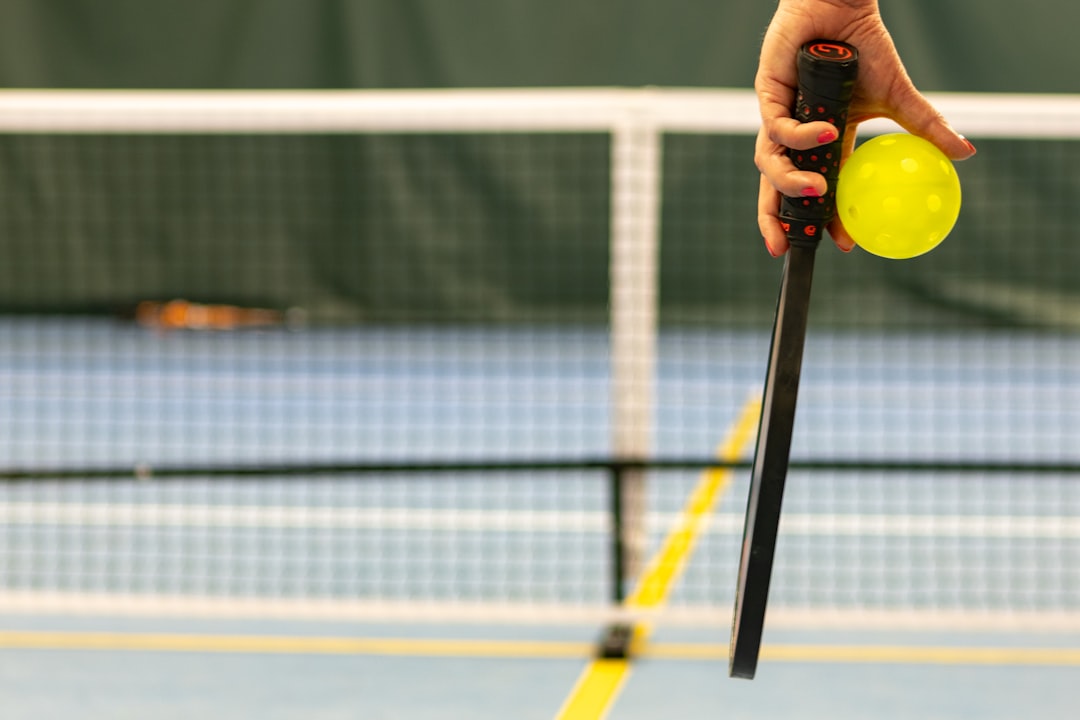

Pickleball has grown from a recreational pastime into a technically demanding sport with serious athletes, structured coaching programs, and measurable performance goals. As participation rises, players are looking for training methods that are more consistent, efficient, and data driven. One of the most significant developments in this shift is the emergence of AI-powered pickleball machines, which combine automated ball delivery with intelligent software designed to adapt to a player’s needs.
TLDR: AI-powered pickleball machines are changing training by delivering smarter, more personalized practice sessions. Unlike traditional machines, they can adjust speed, spin, placement, and patterns based on player performance. These systems can help beginners build fundamentals, competitive players sharpen strategy, and coaches use data more effectively. While they are not a replacement for human coaching, they are likely to become an important part of modern pickleball development.
Why Pickleball Training Is Evolving
Traditional pickleball practice often depends on a training partner, coach, or simple ball machine. While these methods remain valuable, they can be limited by availability, consistency, and variety. A partner may not be able to repeat the same shot hundreds of times with precision. A basic ball machine may deliver balls at set speeds and locations, but it usually cannot respond to how the player is performing.
This is where artificial intelligence introduces a meaningful change. An AI-powered machine can go beyond repetition. It can create adaptive training environments that simulate real match conditions, track the player’s responses, and adjust drills accordingly. For a sport that depends heavily on reaction time, placement, touch, and decision making, this type of intelligent practice has clear potential.
What Makes a Pickleball Machine “AI-Powered”?
A standard pickleball machine typically allows users to control ball speed, frequency, angle, spin, and oscillation. These features are useful, but they require the player or coach to manually select the settings. An AI-powered model adds a layer of intelligence through sensors, cameras, software, and performance algorithms.
Depending on the system, an AI-enabled machine may include:
- Computer vision to track player movement, paddle contact, and ball placement.
- Performance analytics to measure accuracy, reaction time, consistency, and court coverage.
- Adaptive drills that automatically become easier or harder based on results.
- Shot pattern simulation to recreate realistic rallies, serves, returns, dinks, drives, lobs, and passing shots.
- Mobile app integration for programming sessions, reviewing progress, and storing training history.
The goal is not simply to throw balls across the net. The goal is to create a system that understands what the player is trying to improve and then structures practice in a more deliberate way.
Personalized Training at Scale
One of the most important benefits of AI-powered pickleball machines is personalization. In traditional practice, two players may use the same drills even though their weaknesses are completely different. One may struggle with backhand returns, while another may need better footwork at the kitchen line. AI systems can identify these differences and deliver targeted repetitions.
For example, if a player consistently misses low backhand dinks into the net, the machine could increase the frequency of that shot type, reduce the difficulty temporarily, and then gradually add pace, depth, or spin as the player improves. This type of progression mirrors the logic of good coaching: diagnose the problem, isolate the skill, repeat with intention, and then reintroduce pressure.
For beginners, this can make learning less frustrating. For intermediate and advanced players, it can make practice more efficient. Instead of hitting random balls for an hour, athletes can spend focused time on measurable weaknesses.
More Realistic Match Simulation
Pickleball is not only about hitting technically correct shots. It is also about reading patterns, managing court position, and choosing the right response under pressure. A machine that sends the same ball repeatedly is useful for skill building, but it does not fully prepare a player for competition.
AI-powered machines can improve this gap by creating scenario based drills. For example, a player might train against a pattern that begins with a deep serve return, transitions into a third shot drop, and then moves into a fast exchange at the kitchen. Another drill might simulate an opponent who repeatedly attacks the player’s left hip or forces movement from sideline to sideline.
This type of training is important because competitive pickleball requires anticipation. Players must learn not only how to hit a shot, but also when to reset, when to attack, when to let a ball go, and when to move with a partner. AI machines cannot fully replicate human creativity, but they can provide structured exposure to common tactical situations.
The Role of Data in Player Development
Serious athletes increasingly rely on data, and pickleball is no exception. AI-powered machines can collect information that is difficult to track manually during a normal practice session. This may include shot success rate, average response time, placement accuracy, footwork efficiency, and improvement over time.
For coaches, this data can support more objective decision making. A coach may observe that a player struggles with transition zone resets, but data can confirm how often the error occurs and under what conditions. Is the problem caused by pace? Poor positioning? Late preparation? Weak paddle angle? Better information can help coaches design better interventions.
For players training alone, data also creates accountability. It is easy to assume that practice is productive simply because it feels tiring. A performance dashboard can show whether the player is actually improving. If accuracy on cross court dinks rises from 58 percent to 74 percent over several weeks, that progress is visible and motivating.
Benefits for Different Types of Players
AI-powered pickleball machines are not only for elite athletes. Their usefulness depends on how they are programmed and integrated into a training routine.
- Beginners can use slower, predictable feeds to develop basic strokes, timing, and confidence.
- Recreational players can practice without needing a partner, making improvement more accessible.
- Competitive amateurs can work on specific weaknesses, such as returns, drops, speedups, resets, or defensive blocks.
- Advanced players can train high pressure shot sequences and improve endurance under realistic rally conditions.
- Coaches and clubs can use machines to support group lessons, skills testing, and structured development programs.
The technology is especially valuable when court time is limited. A well designed 45 minute AI guided session can produce a high volume of purposeful repetitions, which is often more productive than casual play alone.
Why Human Coaching Still Matters
Despite the promise of AI, it is important to be realistic. A machine does not understand a player in the same way an experienced coach does. It cannot fully evaluate mindset, match temperament, communication with a doubles partner, or the subtle tactical adjustments that occur during live play. It may identify that a player is missing a shot, but a coach may better understand why the issue exists.
The strongest future is likely not AI replacing coaches, but AI supporting them. Machines can handle repetition, measurement, and controlled difficulty. Coaches can focus on interpretation, technique correction, strategy, motivation, and competitive judgment. When used together, the result can be a more complete training environment.
This distinction is important for trust. Technology should not be treated as a shortcut that automatically creates better players. It is a tool. Its value depends on sound training principles, proper use, and consistent effort.
Considerations Before Buying or Using One
As AI-powered pickleball machines become more available, buyers should evaluate them carefully. Not every product marketed as “smart” or “AI” will offer the same level of capability. Some may provide basic app controls, while others may include advanced tracking and adaptive learning.
Important factors to consider include:
- Accuracy and reliability: The machine should deliver balls consistently and safely.
- Ease of use: Advanced features are only valuable if players and coaches can operate them without confusion.
- Quality of analytics: Data should be meaningful, clear, and connected to training goals.
- Portability and battery life: Clubs and individual users need practical equipment that fits their environment.
- Durability: Machines used outdoors must withstand regular transport, weather exposure, and heavy use.
- Software support: Updates, app stability, and customer service are important for long term value.
Cost is another serious consideration. AI-powered equipment is likely to be more expensive than traditional machines. For individuals, the investment may only make sense if they train regularly. For clubs, academies, and coaching businesses, the return may be stronger because one machine can serve many players.
Potential Limitations and Risks
Like any training technology, AI-powered pickleball machines have limitations. Overreliance on machine practice could lead players to become comfortable with predictable patterns, even if those patterns are advanced. Real opponents bring deception, emotional pressure, unusual shot choices, and changing rhythms that machines may not fully reproduce.
There is also the risk of focusing too much on metrics. A player may improve a measurable skill while neglecting less obvious parts of the game, such as court communication, patience, or shot selection. Data should guide development, not dominate it.
Privacy may also become a concern if machines collect video, movement data, or performance profiles. Clubs and manufacturers should be transparent about what data is stored, how it is used, and whether players can control or delete their information.
The Future of AI in Pickleball Training
The next generation of AI-powered pickleball machines will likely become more interactive, compact, and connected. Future systems may integrate with wearable devices, smart paddles, court cameras, and coaching platforms. A player could complete a training session and receive a detailed report showing technical trends, fatigue patterns, and recommended drills for the next practice.
We may also see machines that better simulate specific playing styles. For example, a player could train against patterns modeled after aggressive bangers, patient dinkers, left handed opponents, or teams that use frequent lobs. This would allow athletes to prepare for tactical variety before tournament play.
At the club level, AI systems may support player assessments and rating development. Instead of relying only on match results, clubs could measure skills in controlled environments and recommend appropriate leagues, clinics, or coaching plans.
A Practical Step Forward
AI-powered pickleball machines represent a practical and serious step forward in sports training. They offer consistency, personalization, measurable feedback, and the ability to practice with purpose even without a partner. For a fast growing sport where many players want structured improvement, these advantages are significant.
Still, the technology should be viewed with balance. The best players will continue to need live competition, expert coaching, tactical awareness, and mental resilience. AI can improve the training process, but it cannot replace the full experience of the game.
Used responsibly, AI-powered pickleball machines may become one of the defining tools of modern pickleball development. They can help players train smarter, coaches teach more effectively, and clubs offer more sophisticated programs. The future of pickleball training is not only about hitting more balls; it is about learning from every repetition.