
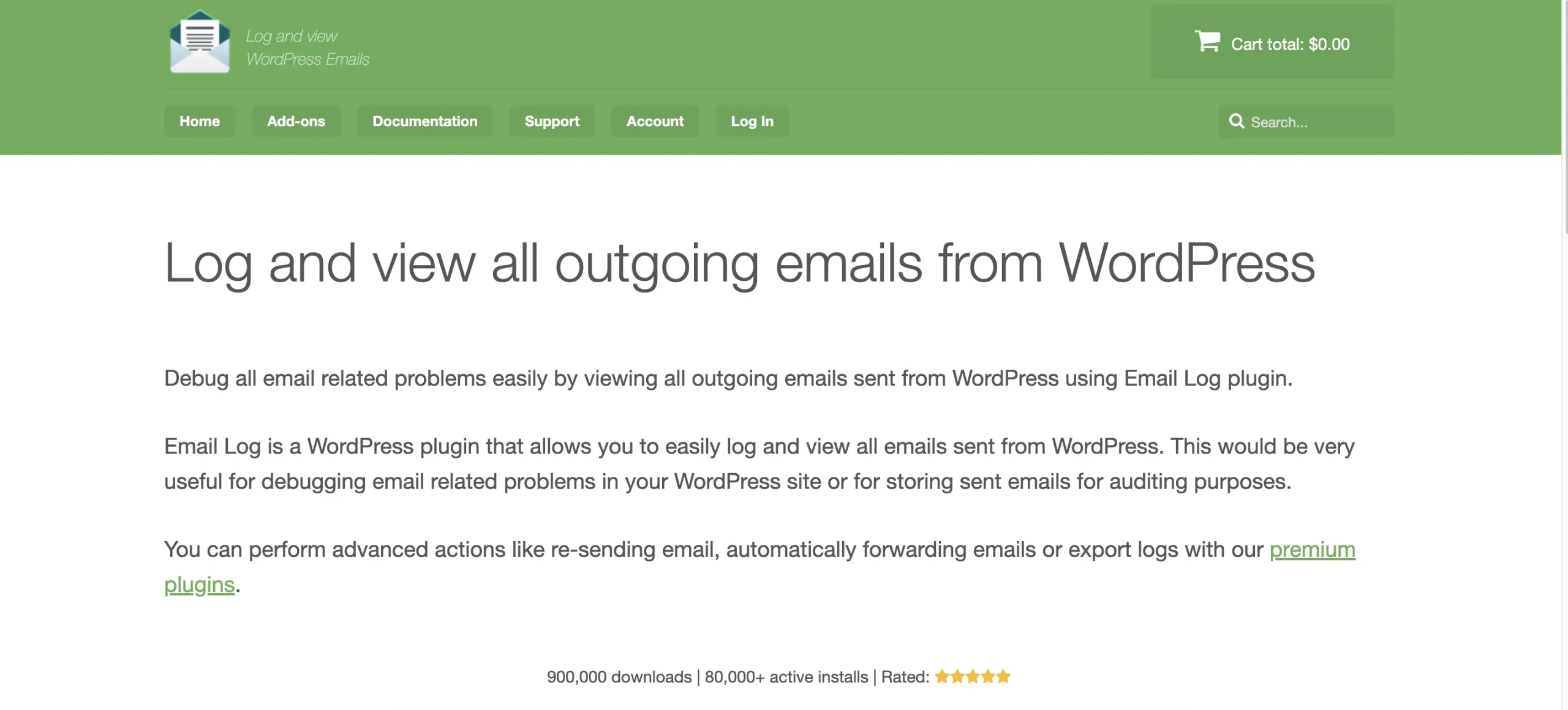

In the era of GDPR, CCPA, and HIPAA, “data” is a liability. Every email your website sends contains Personally Identifiable Information (PII)—names, addresses, password resets. Most WordPress admins treat email logs as a debugging tool. But for a Compliance Officer, logs are Evidence. If a user exercises their “Right to Access,” can you produce a record of every communication you’ve sent them? If a user demands the “Right to be Forgotten,” can you prove you deleted their data from your logs? WP Email Log is the only plugin in its class that treats logging as a compliance workflow. Unlike generic loggers that hoard data indefinitely (a GDPR violation), this plugin offers the granular controls required to enforce data retention policies and pass external audits. In this review, we will explore why this tool is mandatory for regulated industries.
Automating “Data Minimization” (Auto-Delete)
GDPR Article 5(1)(e) mandates “Storage Limitation.” You cannot keep data forever “just in case.” You must delete it when it is no longer needed. Standard loggers store emails until your database crashes. WP Email Log (via its Auto Delete Logs addon) automates compliance.
-
The Policy: You can set a rule: “Delete logs older than 90 days.”
-
The Compliance Win: This runs automatically. You don’t need to remember to purge the database. If you are audited, you can show the auditor your active retention policy configuration, proving that you are not hoarding PII indefinitely.
The “Right to Access” Export
When a user submits a Data Subject Access Request (DSAR), you have 30 days to provide all data you hold on them. This includes emails sent. Searching a SQL database for “john@example.com” and formatting it into a readable file is a nightmare. WP Email Log solves this with the Export Logs feature.
-
The Workflow: Filter by the user’s email. Select “Export to CSV.”
-
The Result: You get a clean, portable file containing every interaction. You can hand this directly to the user or your legal team, satisfying the “Data Portability” requirement instantly.
Role-Based Access Control (Internal Security)
Compliance isn’t just about external hackers; it’s about internal access. A “Subscriber” or “Shop Manager” should not be able to read the CEO’s password reset email logs. Many free plugins expose logs to anyone with “edit_posts” capability. WP Email Log allows for Granular Permissions.
-
The Lock: You can restrict log visibility to only Administrators or a specific Compliance role.
-
The Benefit: This enforces the “Principle of Least Privilege,” ensuring that sensitive PII contained in email bodies is only accessible to authorized personnel.
Validating Transactional Integrity
For e-commerce sites, the email log is your legal proof of contract. If a customer claims, “You never sent me the Terms of Service,” or “I cancelled my order via email but you ignored it,” the log is your defense. WP Email Log captures the Content Context.
-
The Forensic View: You can see if the specific PDF attachment (Contract) was included. You can see the exact timestamp.
-
The Verdict: This immutable record protects the business from “Friendly Fraud” and disputes, providing a court-admissible timeline of events.
Off-Site Redundancy for Audits
Auditors don’t like it when the “Evidence” is stored on the same server as the “Application.” If the server is compromised, the logs are tainted. The Auto-Forward feature creates a Compliance Vault.
-
The Strategy: Forward all system emails to a write-only archival address (e.g.,
audit@vault.com). -
The Value: This creates a secondary, tamper-evident record. Even if a rogue admin deletes the logs from the WordPress dashboard to cover their tracks, the external vault remains intact.
Pricing vs. Fines
-
Agency License: $119/year. GDPR fines can reach €20 million. The cost of a DSAR failure can be thousands in legal fees. Investing $119 to automate your retention and export workflows is arguably the cheapest compliance insurance on the market.
Final Verdict
Compliance is boring, until it becomes expensive. WP Email Log takes the manual labor out of data governance. It transforms your email history from a “Database Liability” into a “Managed Asset,” ensuring that when the auditor comes knocking, you have the retention policies, access controls, and export tools ready to answer every question.