


Application Programming Interfaces (APIs) are the connective tissue of modern software. They power mobile applications, cloud services, partner integrations, and internal microservices. As organizations become increasingly API-driven, attackers follow the same path. API breaches now account for a significant share of data exposure incidents, often exploiting preventable weaknesses. Building secure APIs is not only a technical necessity but also a business imperative.
TLDR: Most API breaches stem from predictable weaknesses such as broken authentication, poor authorization checks, and lack of rate limiting. By implementing strong authentication, strict access controls, input validation, encryption, monitoring, and routine testing, organizations can prevent up to 80% of common attacks. Security must be built into the API lifecycle from design through deployment. Consistency and defense-in-depth are the keys to resilient API architecture.
Below are nine API security best practices that meaningfully reduce risk and address the majority of common attack vectors.
1. Enforce Strong Authentication Mechanisms
Weak authentication remains one of the primary reasons APIs are compromised. Attackers often exploit stolen credentials, brute force attacks, or poorly implemented token systems.
Organizations should:
- Use OAuth 2.0 and OpenID Connect for delegated authorization.
- Require multi-factor authentication (MFA) for sensitive endpoints.
- Implement secure token handling with short-lived access tokens.
- Avoid transmitting API keys in URLs.
Static API keys alone are insufficient protection, particularly for high-value systems. Instead, adopt token-based authentication frameworks that provide expiration, revocation, and scope limitation.

2. Apply Strict Authorization and Access Control
Authentication verifies who a user is. Authorization determines what they can access. Broken object-level authorization (BOLA) and broken function-level authorization (BFLA) are among the most common API vulnerabilities.
Best practices include:
- Implementing role-based access control (RBAC) or attribute-based access control (ABAC).
- Validating permissions at every request, not just at login.
- Denying access by default and granting it explicitly.
- Preventing direct object reference without verification.
Each API endpoint must enforce authorization checks on the server side. Client-side controls are never sufficient because they can be bypassed.
3. Validate All Input and Sanitize Data
Injection attacks—including SQL injection, NoSQL injection, and command injection—continue to threaten APIs that fail to validate input properly.
To mitigate these risks:
- Use strict schema validation for all incoming requests.
- Apply input length restrictions.
- Reject unexpected parameters.
- Use parameterized queries instead of dynamic query building.
APIs should operate under a “whitelist” validation model, accepting only what is explicitly allowed. This single discipline eliminates a substantial percentage of automated scanning attacks.
4. Implement Effective Rate Limiting and Throttling
Without throttling, APIs become vulnerable to brute force attacks, denial of service attempts, and excessive data scraping.
Effective rate limiting includes:
- Restricting the number of requests per IP or user per minute.
- Protecting authentication and password reset endpoints.
- Applying tiered limits for public versus internal APIs.
- Monitoring unusual spikes in traffic.
Rate limiting protects both availability and security. Even simple request caps dramatically reduce the success rate of automated attacks.

5. Encrypt Data in Transit and at Rest
Encryption is foundational, yet inconsistently applied across many environments. APIs should never transmit sensitive information over unencrypted channels.
Key measures include:
- Enforcing HTTPS with TLS 1.2 or higher.
- Disabling deprecated cipher suites.
- Encrypting sensitive fields in storage.
- Implementing certificate pinning where appropriate.
Transport Layer Security (TLS) ensures data integrity and confidentiality, preventing interception and man-in-the-middle attacks. Encryption at rest protects data even if storage systems are compromised.
6. Log, Monitor, and Detect Anomalies
You cannot defend what you cannot see. Logging and monitoring provide visibility into API behavior and potential threats.
Organizations should:
- Log authentication attempts and permission failures.
- Track unusual data access patterns.
- Centralize logs using a Security Information and Event Management (SIEM) system.
- Enable real-time alerting for suspicious activity.
Behavioral monitoring can detect compromised tokens, credential stuffing, or data scraping before major damage occurs. Successful API security programs combine preventive and detective controls.
7. Use API Gateways and Web Application Firewalls
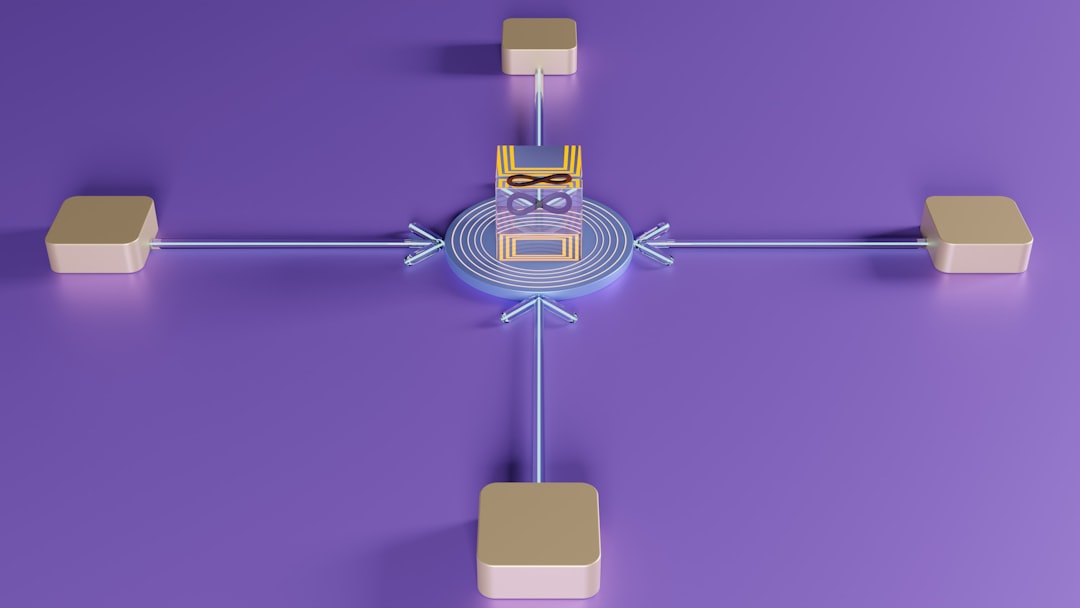
API gateways and Web Application Firewalls (WAFs) add a protective perimeter around backend services. While not substitutes for secure coding, they provide additional filtering and enforcement capabilities.
Benefits include:
- Centralized authentication enforcement.
- Automatic rate limiting and throttling.
- Payload inspection for malicious signatures.
- IP reputation analysis and blocking.
An API gateway acts as a control plane, reducing configuration errors across distributed services. When combined with a WAF, it creates multiple layers of defense.
8. Manage Versions and Deprecate Securely
API version sprawl often leaves legacy endpoints exposed and unmaintained. Attackers frequently target outdated versions that lack modern protections.
Security-conscious version management involves:
- Clearly documenting API lifecycle policies.
- Setting sunset dates for deprecated versions.
- Monitoring usage of older endpoints.
- Promptly patching vulnerabilities across all supported versions.
Version control is not just about compatibility—it is about minimizing your attack surface. Reducing the number of active endpoints lowers risk significantly.
9. Conduct Continuous Security Testing
API security is not a one-time project. Continuous testing identifies weaknesses before adversaries exploit them.
Effective testing includes:
- Automated security scanning integrated into CI/CD pipelines.
- Regular penetration testing focused on API endpoints.
- Fuzz testing for unexpected input handling.
- Reviewing business logic for abuse scenarios.
Modern development environments require security to be embedded within the DevOps lifecycle—often referred to as DevSecOps. Automated tools validate security controls on every release, reducing human oversight risks.
Building a Culture of API Security
Technology alone does not prevent API breaches. Security must be embedded into organizational practices. Development teams should follow secure coding standards, security teams must provide governance and auditing, and leadership should prioritize risk management.
A defense-in-depth API strategy includes:
- Designing with security requirements from the outset.
- Performing threat modeling before implementation.
- Training developers on common API vulnerabilities.
- Maintaining clear documentation and inventory of all APIs.
Many breaches occur not because defenses were unavailable, but because basic controls were inconsistently applied. The majority of exploits target well-known weaknesses documented by frameworks such as the OWASP API Security Top 10.
Conclusion
API ecosystems will continue to expand as organizations digitize services and integrate with external partners. With this growth comes escalating risk. However, preventing most API attacks does not require exotic tools or complex systems. It requires disciplined adherence to proven fundamentals.
Strong authentication and authorization, proper input validation, rate limiting, encryption, monitoring, layered defenses, lifecycle management, and continuous testing together neutralize the vast majority of common attack methods. Organizations that consistently apply these nine best practices position themselves to prevent approximately 80% of API-related threats.
In cybersecurity, fundamentals matter. When it comes to APIs, disciplined execution of these essentials is the difference between a resilient platform and a preventable breach.