
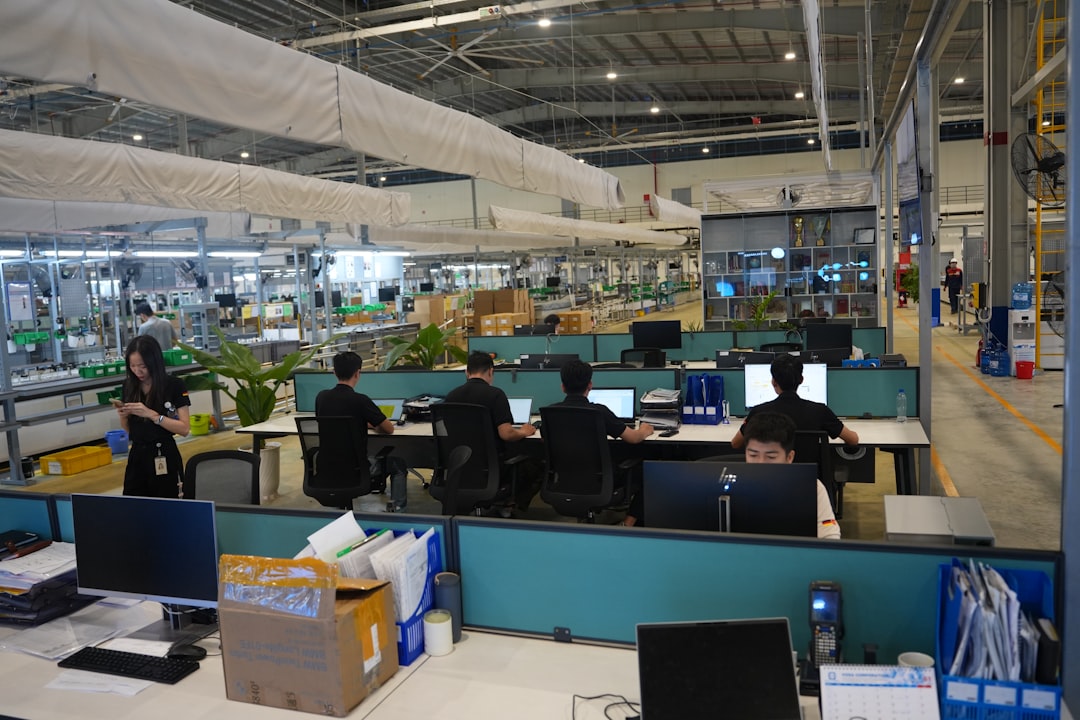

Manufacturing companies face a unique set of operational challenges—from managing raw materials and production schedules to maintaining equipment, ensuring quality, and delivering products on time. For small and mid-size factories, balancing these moving parts with limited resources can be especially demanding. That’s where Manufacturing ERP (Enterprise Resource Planning) software becomes a game-changer, bringing together inventory, finance, production, sales, and supply chain management into a single, streamlined system.
TLDR: Manufacturing ERP software helps small and mid-size factories centralize operations, improve visibility, and boost efficiency. The right platform can streamline production planning, inventory control, quality management, and financial reporting. This article explores six leading ERP solutions tailored to growing manufacturers, along with a comparison chart to simplify your decision. Choosing the right system depends on your industry, budget, scalability needs, and preferred deployment model.
Why Manufacturing ERP Matters for Smaller Factories
Unlike generic business software, manufacturing ERP systems are built to handle complex production workflows. They integrate:
- Bill of Materials (BOM) management
- Material Requirements Planning (MRP)
- Production scheduling
- Inventory and warehouse management
- Quality control and compliance
- Shop floor data collection
For small and mid-sized factories, these capabilities help eliminate manual spreadsheets, reduce downtime, minimize waste, and improve on-time delivery rates.
1. NetSuite ERP (Manufacturing Edition)
Best for: Growing manufacturers seeking a fully cloud-based, scalable solution.
NetSuite offers a comprehensive cloud ERP platform with robust manufacturing functionality. Built for businesses that expect growth, it supports everything from procurement to production and financial reporting.
Key features:
- Work order and assembly management
- Demand planning and forecasting
- Real-time inventory visibility
- Shop floor control
- Integrated CRM and financials
Why it stands out: NetSuite’s scalability makes it ideal for manufacturers planning to expand operations, add locations, or move internationally. Its strong reporting capabilities provide deep insight into operational performance.
Potential downside: Pricing may be higher compared to entry-level ERP systems.
2. SAP Business One
Best for: Small to mid-size manufacturers needing strong industry-specific functionality.
SAP Business One is a well-known ERP designed specifically for small and medium-sized businesses. It offers specialized manufacturing modules and can be deployed either on-premise or in the cloud.
Key features:
- BOM and production order management
- MRP and capacity planning
- Quality control tools
- Financial and cost accounting
- Inventory and warehouse management
Why it stands out: Its strong reputation and global partner network make implementation and support widely accessible. Industry-specific add-ons further enhance its flexibility.
Potential downside: Customization can increase implementation timelines.
3. Odoo Manufacturing
Best for: Cost-conscious manufacturers who want modular flexibility.
Odoo is an open-source ERP platform offering modular applications, including a powerful manufacturing module. Businesses can start small and add functionality as needed.
Key features:
- Work centers and routing management
- Maintenance tracking
- PLM (Product Lifecycle Management)
- Inventory and purchase management
- Barcode scanning support
Why it stands out: Its modular pricing structure allows smaller factories to avoid paying for features they don’t use. The open-source version also allows deeper customization.
Potential downside: Advanced customization may require technical expertise.
4. Epicor Kinetic (for Manufacturing)
Best for: Discrete manufacturers needing strong production control.
Epicor Kinetic is built specifically for manufacturers and offers industry-tailored solutions for automotive, aerospace, electronics, and industrial machinery sectors.
Key features:
- Advanced planning and scheduling (APS)
- Shop floor execution system (MES integration)
- Supply chain management
- Quality assurance tools
- Cloud and on-premise deployment options
Why it stands out: Its deep manufacturing functionality makes it an excellent fit for factories with complex production processes.
Potential downside: May be feature-heavy for very small operations.
5. Acumatica Manufacturing Edition
Best for: Mid-size businesses wanting modern cloud flexibility without per-user pricing constraints.
Acumatica is a cloud-based ERP designed with usability and flexibility in mind. Its pricing model is based on resource consumption rather than per-user fees, which can be attractive for growing teams.
Key features:
- Production management
- Engineering change control
- Material requirements planning
- Embedded business intelligence dashboards
- Mobile access
Why it stands out: Acumatica offers modern user experience, open APIs for integrations, and strong reporting capabilities.
Potential downside: Implementation costs vary depending on customization.
6. SYSPRO
Best for: Established small manufacturers needing deep inventory and distribution capabilities.
SYSPRO has long focused on manufacturing and distribution industries. It supports both discrete and process manufacturing environments.
Key features:
- Lot traceability and compliance support
- Production scheduling and tracking
- Cost tracking and variance analysis
- Supply chain and warehouse management
- Financial management integration
Why it stands out: SYSPRO’s strong compliance and traceability tools make it ideal for regulated industries such as food processing and medical device manufacturing.
Potential downside: Interface may feel less modern compared to newer cloud-native platforms.

Comparison Chart
| ERP Platform | Deployment | Best For | Scalability | Notable Strength |
|---|---|---|---|---|
| NetSuite | Cloud | Growing manufacturers | High | Integrated financials and global support |
| SAP Business One | Cloud / On-premise | SMBs with industry needs | High | Strong partner ecosystem |
| Odoo | Cloud / On-premise | Budget-conscious factories | Moderate to High | Modular and customizable |
| Epicor Kinetic | Cloud / On-premise | Complex discrete manufacturing | High | Advanced production control |
| Acumatica | Cloud | Mid-size agile businesses | High | Consumption-based pricing |
| SYSPRO | Cloud / On-premise | Inventory-heavy industries | Moderate to High | Compliance and traceability |
How to Choose the Right ERP for Your Factory
Selecting the right ERP platform is less about choosing the “best” system and more about finding the right fit. Consider these factors before making a decision:
- Industry specialization: Does the system support your specific manufacturing type (discrete, process, mixed-mode)?
- Deployment preference: Cloud offers flexibility; on-premise offers control.
- Budget and pricing model: Subscription, license-based, or consumption-based?
- Scalability: Will the software grow with your business?
- Integration capabilities: Can it integrate with CAD, MES, eCommerce, or third-party logistics systems?
- User adoption: Is the interface intuitive for shop floor employees?
The Bottom Line
For small and mid-size factories, implementing a manufacturing ERP system is not just a technology upgrade—it’s a strategic move toward operational excellence. With real-time data visibility, improved inventory control, better cost tracking, and streamlined production workflows, ERP systems empower manufacturers to compete more effectively in fast-moving markets.
Whether you prioritize affordability, scalability, industry-specific functionality, or modern cloud architecture, the six ERP platforms highlighted above offer strong solutions tailored to manufacturing environments. By carefully evaluating your operational complexity and growth plans, you can select an ERP system that transforms your factory from reactive to proactive—unlocking greater efficiency, profitability, and long-term success.